What Is Venetian Plaster? Finishes, Uses, Pros and Cons (NYC Guide)
What is Venetian plaster? Lime and marble troweled on in thin coats. Its finishes, bathroom and kitchen use, pros and cons, care and typical NYC prices.
- By
- DecoStyle USA
- Published
- Reading time
- 10 min
In this guide
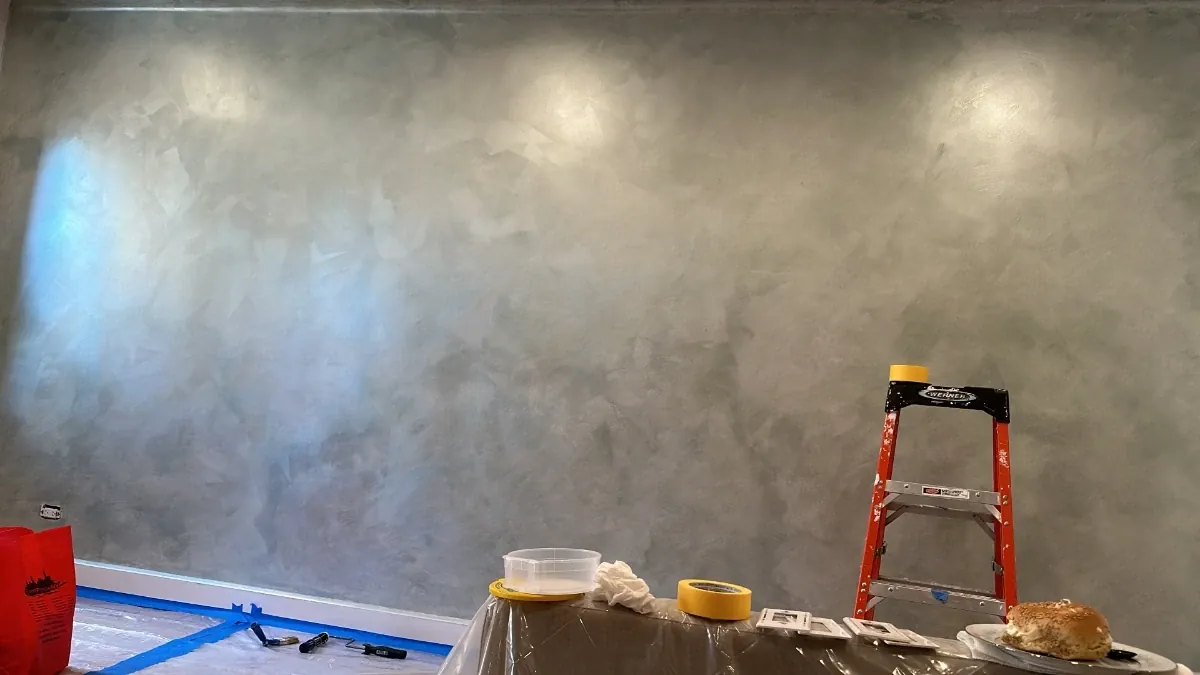
Venetian plaster is a decorative wall finish made from slaked lime putty and finely ground marble, troweled onto walls and ceilings in several paper-thin coats and burnished with a steel trowel to anything from a soft matte to a glassy, marble-like shine. Because the color runs through the material and the lime slowly hardens back into the mineral that limestone and marble are made of, Venetian plaster walls read as stone rather than paint. The name now also covers resin-modified and fully acrylic plasters that copy the look, so it pays to know what is in the bucket.
We install Venetian plaster across New York City, from Queens to Manhattan, and on Long Island and in Westchester. For prices, see our Venetian plaster cost guide.
What is Venetian plaster made of?
Traditional Venetian plaster has three ingredients:
- Slaked lime (lime putty). Limestone is burned into quicklime, then mixed with water into a soft paste of calcium hydroxide. Kept in a sealed container, lime putty stays workable indefinitely, according to the National Park Service; gypsum plaster, by contrast, sets chemically soon after it is mixed.
- Marble powder. Fine marble gives polished plaster its density and shine; coarser grain makes marmorino and textured finishes. Vasari, for example, describes its Veneziano as micro-filtered lime and powdered marble, and its Marmorino as lime with powdered marble and fine marble sand, for a smooth to medium texture.
- Pigment. The plaster is tinted before it goes on, so the color is in every coat, not in a film on top.
How it hardens. Lime doesn't set like gypsum or cement. It hardens by carbonation, absorbing carbon dioxide from the air and turning back into calcium carbonate. The lime keeps hardening for weeks after the wall feels dry, and the Park Service's guide to lime mortars notes that lime mortar left to dry too fast carbonates less, with poor adhesion and durability.
Resin-modified and acrylic versions. Many lime plasters sold today include a small share of resin for workability and bond: Vasari lists "a small percentage" of organic additives and resins in its Veneziano, and Stucco Italiano keeps synthetic additives in its lime plasters below 2.5%. Other products sold as Venetian plaster are bound with acrylic resin instead of lime. They are troweled the same way but harden as the resin dries, and some metallic and pearlescent plasters are made this way.
| Type | What binds it | How it hardens | Where you'll see it |
|---|---|---|---|
| Traditional lime plaster | Lime putty and marble powder | Carbonation | Polished stucco veneziano, marmorino, travertino |
| Lime plaster with additives | Lime putty and marble, plus a small share of resin | Mainly carbonation | Many lime plasters sold today |
| Acrylic plaster | Acrylic resin | The resin dries | Some metallic and pearlescent finishes |
Free estimate
Want a quote for this?
DecoStyle USA does Venetian plaster across NYC and Long Island. Free site visit, written quote.
Venetian Plaster in NYCHow Venetian plaster is applied
Every product has its own data sheet. These steps follow Vasari's Veneziano instructions and Novacolor's Marmorino KS data sheet, which are typical of lime plasters.
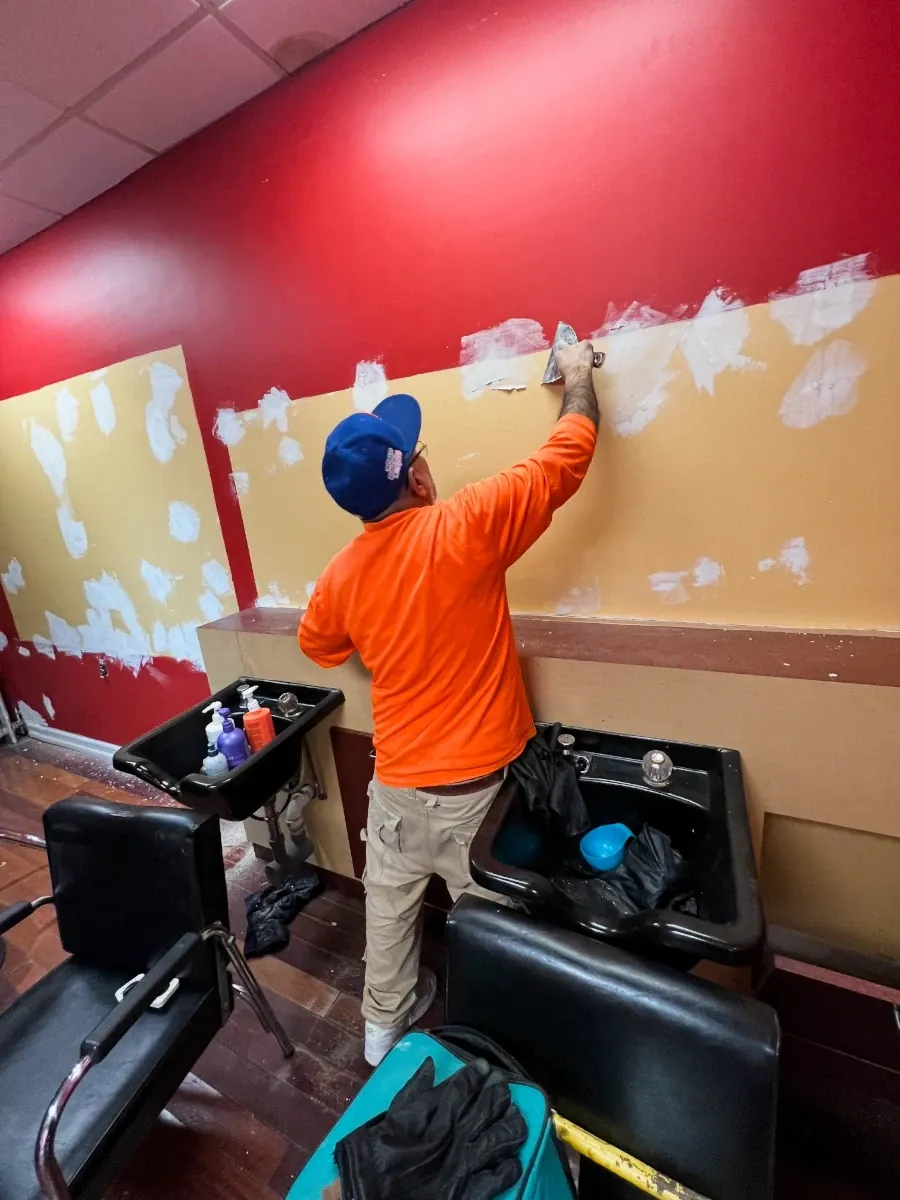
- Prepare the wall. Plaster this thin shows everything underneath. Drywall should be finished to Level 4 or better (Gypsum Association GA-214). Prewar plaster is repaired and skim coated flat first; our guide to plaster vs drywall in prewar NYC explains what you are likely to find. In homes built before 1978, scraping or sanding old paint falls under the EPA's lead-safe Renovation, Repair and Painting rule, and in older NYC rentals where a young child lives, the city's Local Law 1 adds its own lead-safe work and cleanup rules.
- Prime. A mineral primer, or a flat latex or acrylic primer, evens out absorption. Vasari warns against stain-blocking or shiny primers and against plastering over oil-based paint.
- Base coat. The first coat fills and flattens, then needs a full day to dry.
- Finish coats. Paper-thin passes, up to about half a millimeter, laid on with a steel trowel. The installer keeps a wet edge and stops only at a corner or another natural break. Manufacturers call for at least two coats over primer; polished finishes often get a third or more.
- Burnish. When the last coat reaches a clay-like dryness, the trowel is pressed across it to compress and polish the surface. For a matte finish, the burnish is skipped and the wall is lightly sanded with 320-grit or finer paper.
- Seal or wax, where needed. Optional indoors. A mineral sealer protects against dirt, stains and water marks; wax adds water resistance and a higher luster.
How long it takes
At 77°F and 50% humidity, Vasari gives Veneziano 12 hours to dry to the touch and 24 hours before the next coat, and Novacolor puts Marmorino KS at about 24 hours. With a day between coats, a single room with prep, primer and two or three coats typically takes three to five working days; repairs and skim coating add to that.
Conditions matter too. Novacolor says not to apply its marmorino below 50°F or above 95°F, in direct sun or on hot surfaces: in a New York apartment, think steam radiators running full blast in January. In co-ops, the schedule also has to fit permitted work hours, because each wall is finished to a corner before the crew leaves. Afterward, treat the wall gently for the first few weeks: no tape, no scrubbing, no furniture pushed against it.
Venetian plaster finishes
The names overlap from one manufacturer to the next, but these are the finishes you will be shown.
| Finish | What it is | How it looks | Typical NYC price, installed |
|---|---|---|---|
| Polished Venetian plaster (stucco veneziano) | Lime and fine marble powder, burnished | Smooth and marble-like, medium to high polish | $15–$30 per sq ft |
| Marmorino | Lime with a coarser marble grain | Soft trowel movement, matte to satin, can be burnished higher | $12–$25 per sq ft |
| Travertino | Textured lime plaster | Pores, veins and layered bands like travertine stone | $12–$25 per sq ft |
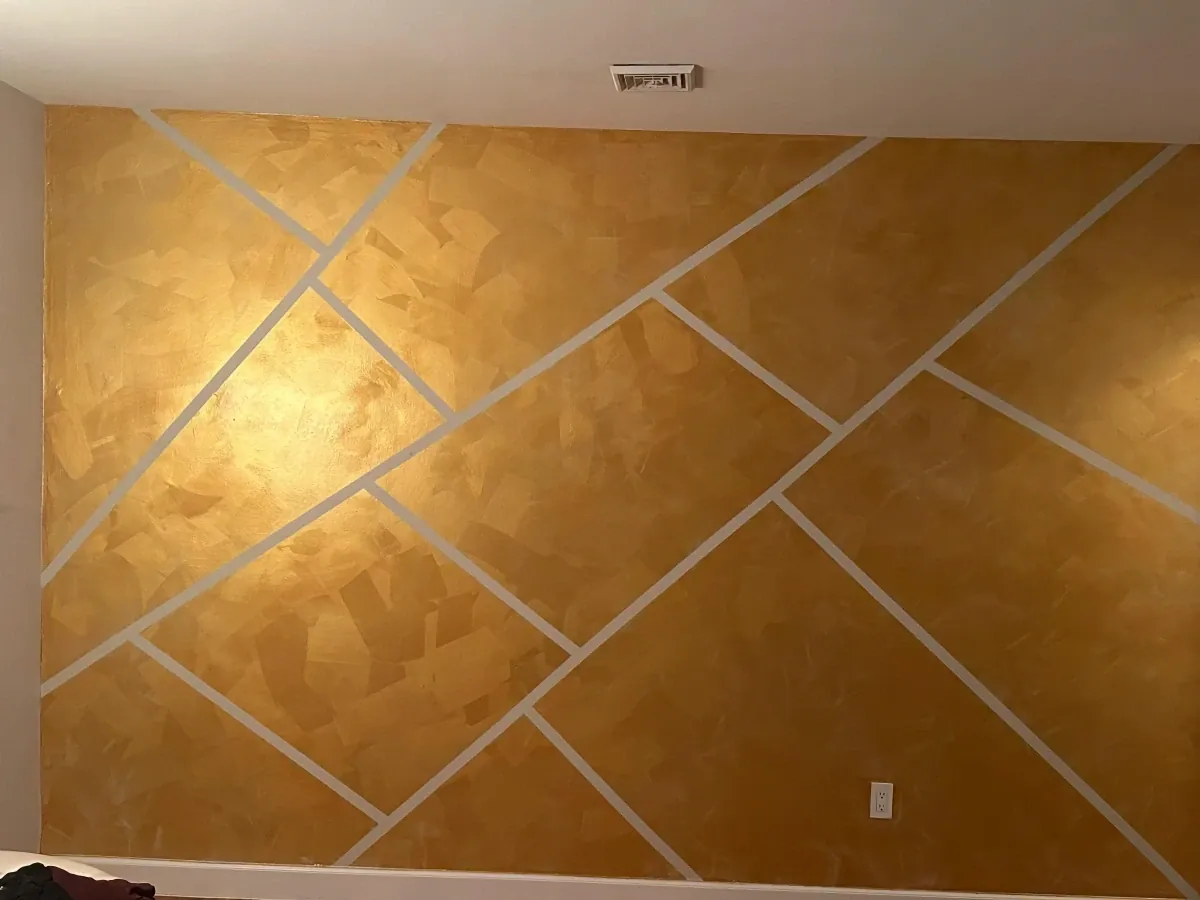
| Metallic and pearlescent | Lime with mica, or acrylic metallic plaster | Gold, silver, bronze or pearl shimmer | $20–$40 per sq ft |
These are typical NYC market ranges for labor and standard materials, not DecoStyle quotes; we quote after a free site visit. Small areas often carry a minimum, because prep, setup and cure time barely shrink: an accent wall of about 100–150 sq ft typically runs $1,500–$4,500. The cost guide explains what moves the price.
- Polished Venetian plaster. The most depth and the most hours. Extra-glossy products sold as grassello aim for an almost mirror-like wall.
- Marmorino. The workhorse finish. Some marmorino products are rated for exteriors, and Vasari names it the most common finish for its shower system.
- Travertino. A textured finish that Stucco Italiano places in the Italian Renaissance tradition. The texture hides small irregularities a high polish would show.
- Metallic. Mica-rich lime or acrylic metallic plaster gives the strongest shimmer; metallic waxes in gold, silver and bronze over a finished wall give a subtler one.
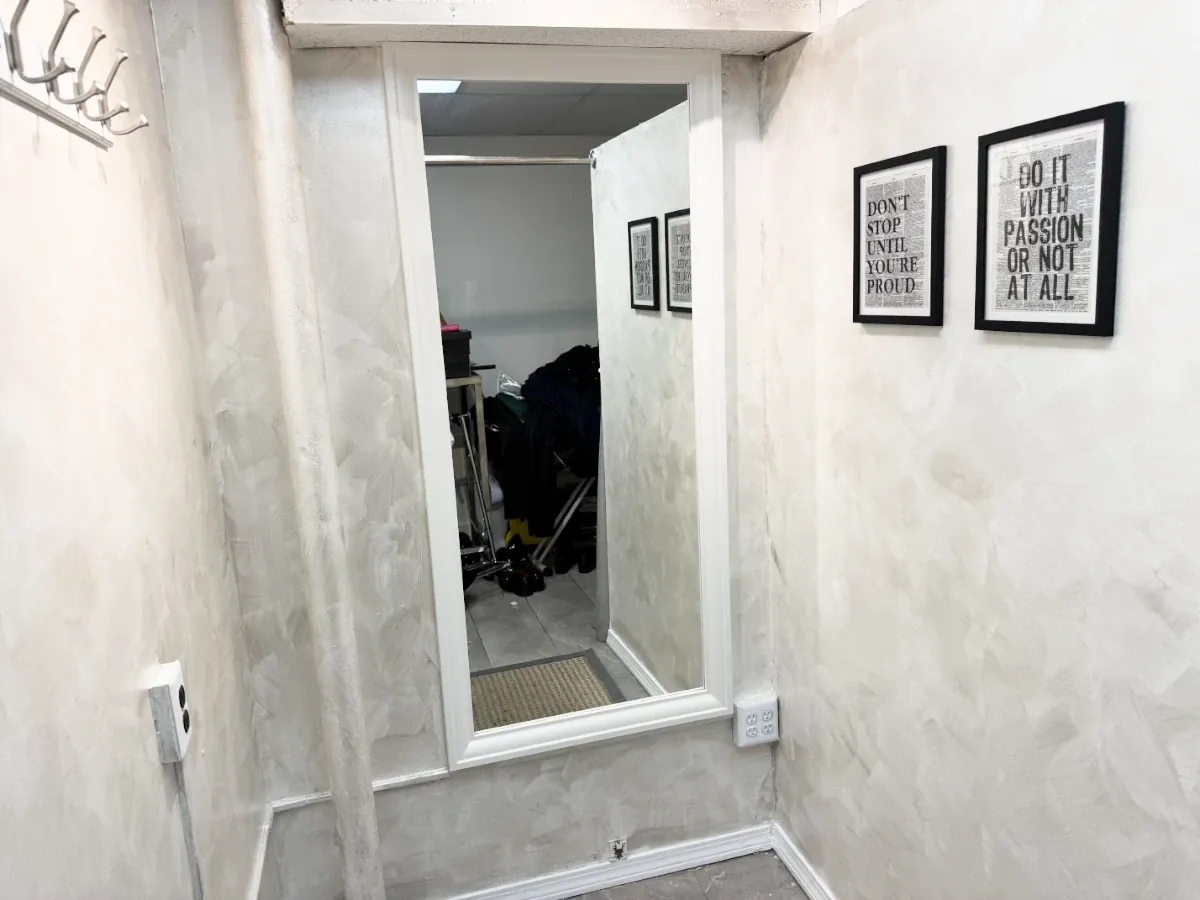
- Matte, unburnished lime. A soft, suede-like surface with no shine. Without the compressing burnish it marks more easily, so it suits bedrooms and ceilings.
Where Venetian plaster works, and where it doesn't
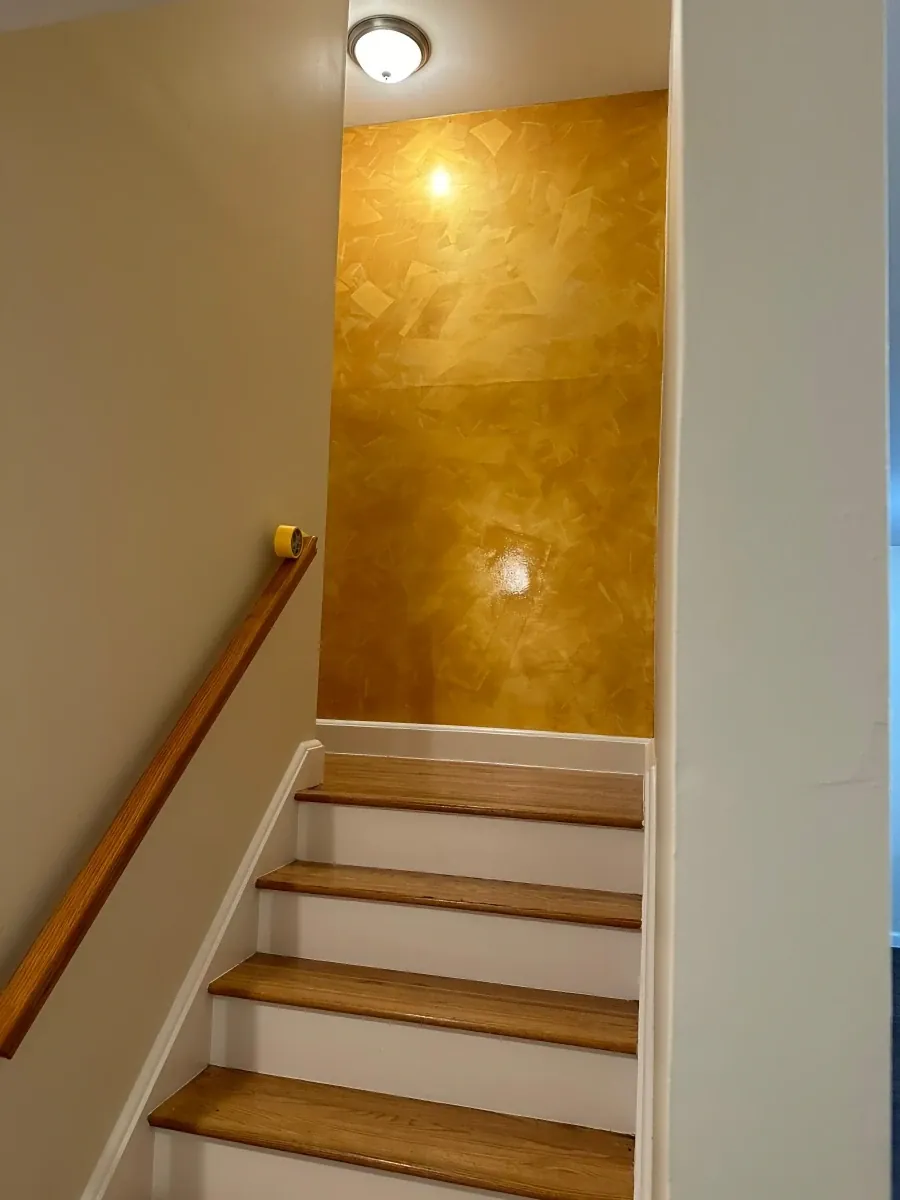
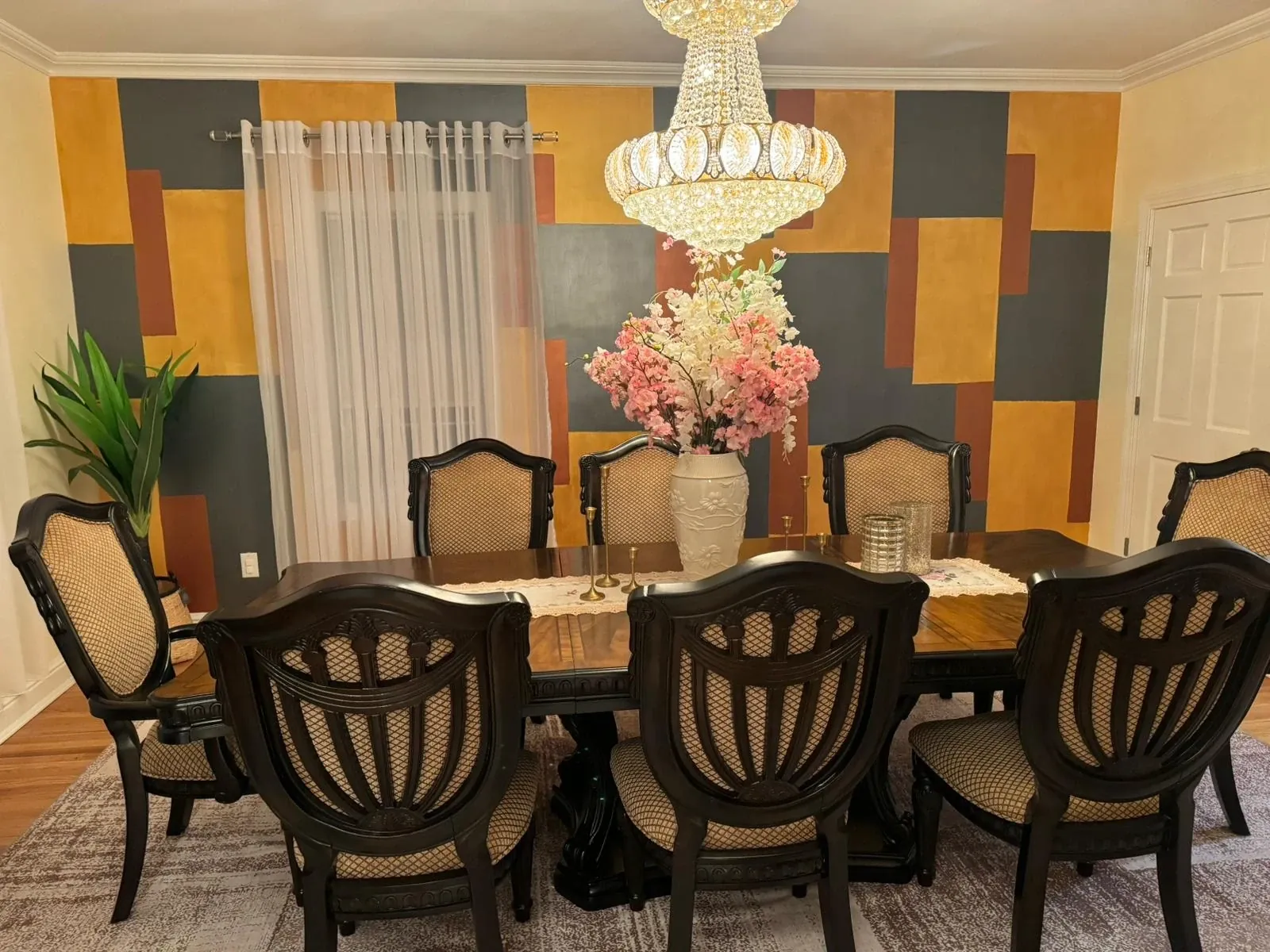
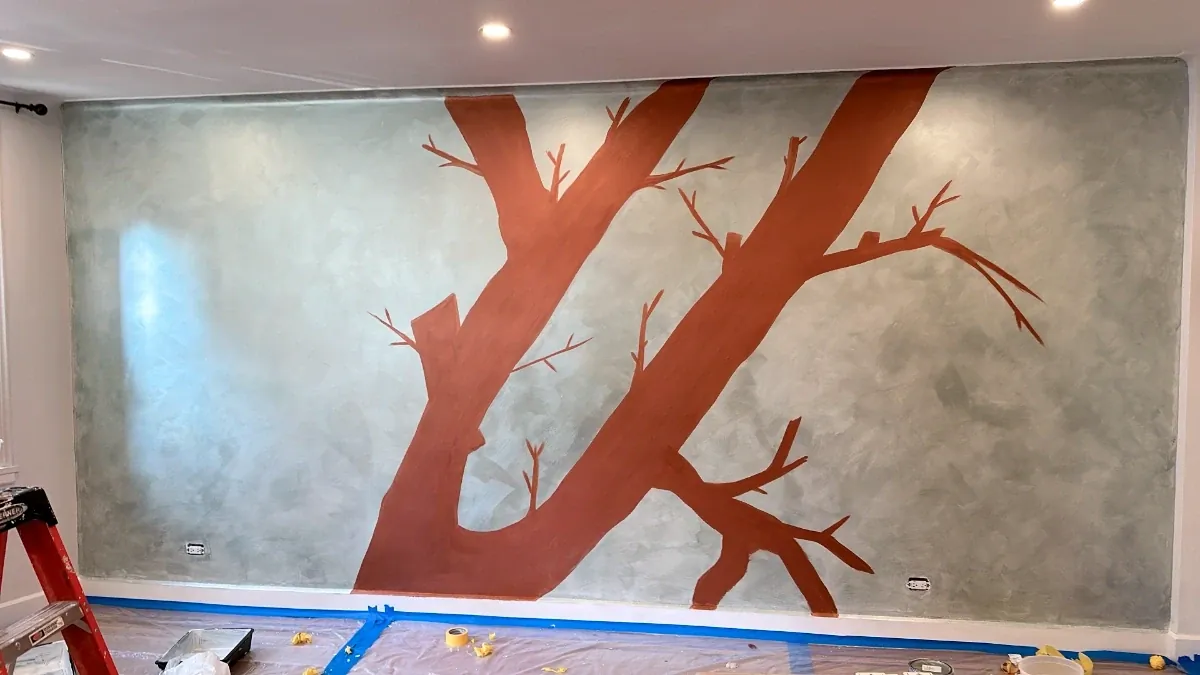
Venetian plaster walls work best where light moves across a surface and people slow down to look: entry halls and stairwells, feature walls behind a sofa or bed, fireplace and TV walls, ceilings, and columns, arches and curved walls where marble panels would be hard or costly to fit.
It works in businesses too: reception walls, showrooms, salons, restaurant walls and counters. The counter front at Café Renis in Astoria is blush-pink Venetian plaster.
Venetian plaster in bathrooms
Bathroom walls outside the shower are a good fit, with protection. Lime is breathable, and Vasari describes lime plasters as naturally resistant to mold, but heavy water contact can leave streaks or a patina on unsealed plaster. A mineral sealer guards against that and wax adds water resistance; the wetter the wall, the more protection it needs.
Inside a shower, the plaster is a finish, not the waterproofing. Vasari's shower system, for example, starts with cement or fiberglass backer board and an elastomeric waterproofing coat, then two base coats, the plaster, two coats of mineral sealer and two thin coats of wax. Unless the plaster you are quoted is made for showers, and the wall behind it is waterproofed the way its maker specifies, keep Venetian plaster outside the wet zone and tile inside it.
Venetian plaster in kitchens
Kitchen walls are fine. For a backsplash, Vasari recommends its mineral sealer, wax or both. Wipe grease promptly, and keep vinegar and citrus cleaners off the plaster. Directly behind a range, where grease and heat hit the wall every day, stone or tile with plaster around it is the practical choice.
Outside
Most Venetian plaster goes indoors. The few exterior products, mostly marmorino, need light colors, protection from freezing during the job and from rain for about 48 to 72 hours afterward (Novacolor), so on Long Island and in the outer boroughs they wait for mild, dry weather.
Pros and cons of Venetian plaster
Pros
- Depth. Thin layers of lime and marble catch the light the way stone does.
- No seams. No grout lines or wallpaper joins, and it wraps columns, arches and curves.
- Repairable. Nail holes and scratches fill with the same plaster.
- Long-lived. On a sound wall it lasts as long as the wall.
- Breathable lime. Novacolor rates Marmorino KS as highly vapor-permeable, and Vasari describes its lime plasters as zero-VOC.
Cons
- Cost. In NYC, polished plaster typically runs about ten times the per-square-foot price of standard painting.
- Time. About a day between coats, plus prep.
- It shows the wall. A high polish picks out every ridge, so prep is part of the price.
- Water, acids and knocks. Unsealed lime can water-mark, acidic cleaners and bleach damage it, and a hard knock can chip it.
- Color matching. Batches vary slightly; Novacolor advises finishing a job from one batch or mixing batches together.
Durability, repairs and care
Upkeep. The plaster itself lasts as long as the wall under it; what wears is the wax or sealer on busy or wet walls, which can be reapplied whenever water starts to soak in instead of beading. Cracks usually come from the wall beneath or from plaster troweled on too thick, so damaged walls get a proper plaster repair first.
Repairs. Vasari's care guide says to fill nail holes and scratches with the same plaster used on the wall; holes bigger than about an inch square get drywall compound first, then plaster. Ask your installer for a sealed, labeled container of your tinted plaster and the color recipe: matched material is what makes a patch disappear.
Cleaning. Dust, and wipe marks with water and a sponge or a white cotton cloth (colored fabric can bleed dye into the plaster). Waxed walls can take mild soap. Never use acidic cleaners or bleach.
Real vs faux Venetian plaster
Three different things get sold as "Venetian plaster":
- Lime Venetian plaster: lime putty and marble, troweled and burnished, hardening by carbonation.
- Acrylic Venetian plaster: troweled the same way, but bound with resin.
- Faux Venetian plaster: a painted imitation, with glaze or tinted paint applied by trowel, brush or rag. It is a paint film rather than a layer of plaster, and it costs less: glaze and color-wash finishes typically run $4–$10 per sq ft in NYC.
All three have their place; our faux finishing page shows what paint can do. The problem is only paying plaster prices for paint, or lime prices for acrylic. We tell you which product we are specifying before you approve a sample.
Weighing other lime and clay finishes? Limewash typically costs $3–$8 per sq ft on interior walls in NYC and Roman clay $8–$18; our Venetian plaster vs limewash vs Roman clay guide compares the three.
How to choose a Venetian plaster installer
- Look at real work, close up. Photos of finished jobs, not renderings, and ideally a wall you can see in person. Check the corners and edges in raking light.
- Get a sample in your own light. Plaster shifts between daylight and lamplight. Approve the finish on your wall, or on a board held against it, before the job starts.
- Get the data sheets. Product, binder (the composition section says whether it is lime, resin or a mix), required wall prep, recoat times and any wet-area rating. If an installer can't tell you what is in the bucket, keep looking.
- Ask about prep and protection. What happens to the cracks, how old paint is handled in a pre-1978 home, and which sealer or wax goes where.
- Check they can work in your building. Co-ops and condos usually ask contractors for a certificate of insurance naming the building and its managing agent, and many limit work to weekday hours.
- Get it in writing: finish, product, square footage, prep, coats and protection.
If you are in New York City, on Long Island or in Westchester, we will look at your walls and give you a free estimate, and you approve a sample before any plaster goes on. See our Venetian plaster service in NYC for finishes, photos and typical prices, or contact us to book a visit.